

CAN TIGHT HIP FLEXORS CAUSE LOW BACK PAIN?
If you’re experiencing low back pain and haven’t found relief with exercise, heat therapy or stretching, your hip flexors might be the ones to blame.
Tight hip flexors are commonly overlooked as a potential cause of low back pain, in fact, many people struggling with low back pain will likely have associated hip flexor tightness.
Tightness can be subjective (what you perceive/feel) and/or objective (what we can see/measure). Individuals might describe their tightness as stiffness, discomfort, and/or pain, which may have arised from causes such as over/underuse or strains. Objectively, healthcare professionals may find reduced flexibility or muscle length through assessments such as range of motion, functional movement patterns (e.g. squatting, walking), or posture.
HOW DOES HIP FLEXOR TIGHTNESS AFFECT THE LOW BACK?
The hip flexors are a group of muscles that help to lift your legs and bring them closer to your torso, such as when walking and bending forward. It’s often not acknowledged that some of these muscles attach onto the lumbar spine to help with stability of the lower back.
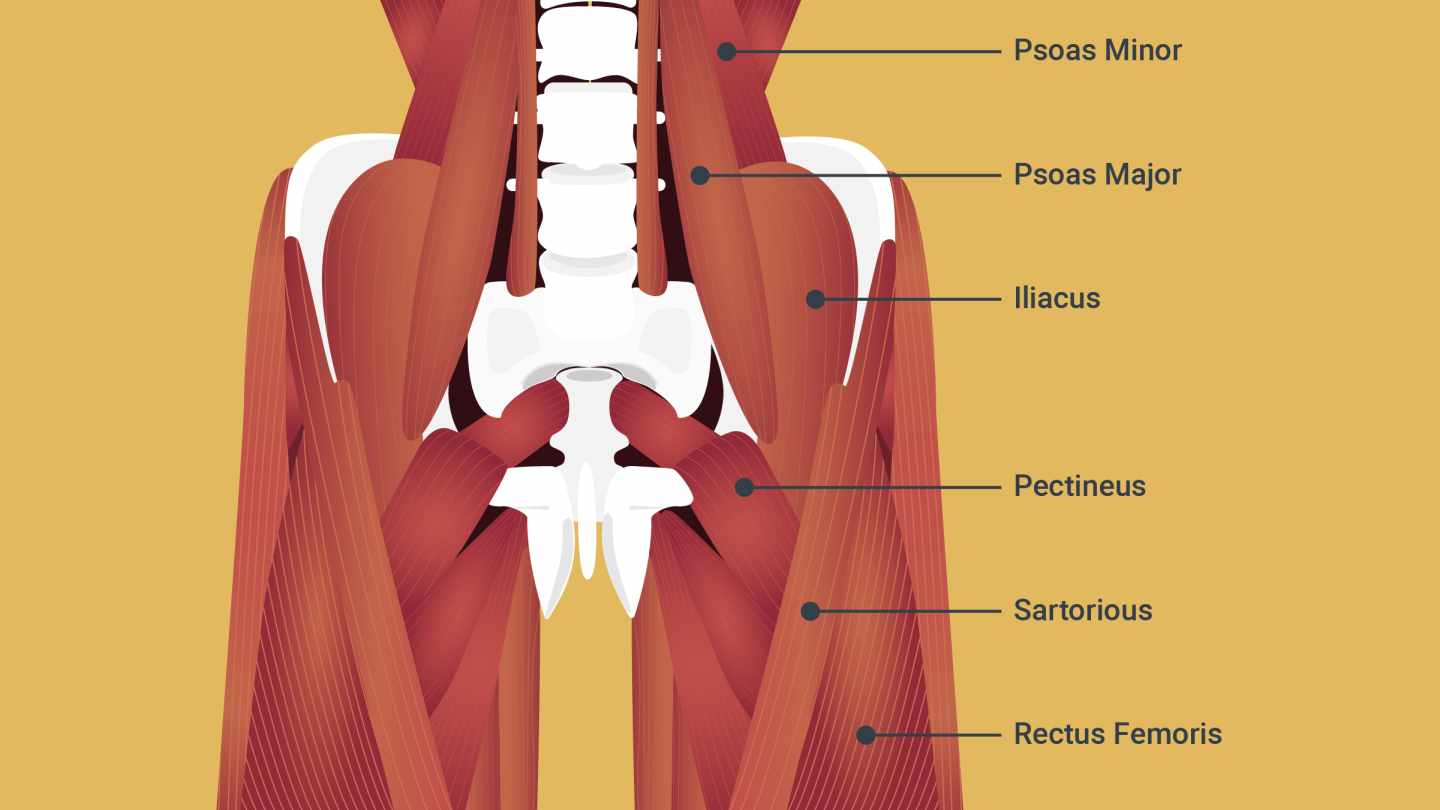
The two more well-known hip flexors are the psoas and iliacus muscles, also called the iliopsoas muscle. The psoas muscle originates at the lumbar spine, while the iliacus muscle originates at the inner pelvis, both then join together to attach onto the thigh. These pairing of muscles help to stabilise the lumbar spine more so than acting as a true hip flexor. Understanding the anatomical positioning of this hip flexor helps to realise why many people with chronic hip tightness can cause lower back pain as well.
The remaining hip flexor muscles – the pectineus, rectus femoris and sartorius – play a larger role in hip flexion due to their more favourable attachment sites, and often get overshadowed by the iliopsoas muscle.
TOP 3 REASONS FOR HIP TIGHTNESS
- Prolonged sitting
Spending long hours sitting, such as during work or driving, will keep the hip flexors in a shortened position, potentially leading to muscle tightness, decreased mobility and discomfort.
- Poor posture
Sustained postures like slouching or anterior pelvic tilting can contribute to the shortening of the hip flexors, leading to unwanted muscular changes. These changes go hand-in-hand with prolonged sitting and can often exacerbate these symptoms
- Lack of physical activity
A larger factor is hip flexors often being too weak to handle repetitive use, which can lead to mico-traumatic overloading of these muscles over time. This creates a subjective stiffness/tightness, individuals might utilise stretching techniques to seek relief from their ‘tightness’, however the key is to progressively load the hips to help improve muscle tolerance and sensation.

At Fortitude Chiropractic, our experienced team is dedicated to relieving your low back pain. We conduct thorough assessments to identify the underlying causes of your discomfort and provide targeted treatments and exercise to address them effectively.
Click here to book online, or give us a call at (08) 6184 8835 to get the relief you desire.
Here are some of our Related blogs:

Hip Pain Treatment Perth
Hip Pain Treatment Perth Hip pain can be a real pain in the butt, but it doesn't have to stop you from doing the things you love. At Fortitude Chiropractic we provide expert assessment and treatment for hip pain for people in Scarborough, Doubleview, Innaloo and the...

How Blood Sugar and Inflammation Affect Your Joints and Tendons
How Blood Sugar and Inflammation Affect Your Joints and TendonsYou might not immediately think of blood sugar or inflammation when it comes to joint or tendon pain. Yet research shows that your broader metabolic health plays a crucial role in musculoskeletal...

What Causes Sciatic Nerve Pain
"What Causes Sciatic Nerve Pain?" is a commonly asked question that we get from patients at our clinic.WHAT IS SCIATICA? The sciatic nerve is the longest and thickest nerve in the body, and is comprised of the nerve roots originating from our lumbar spine.These nerve...